
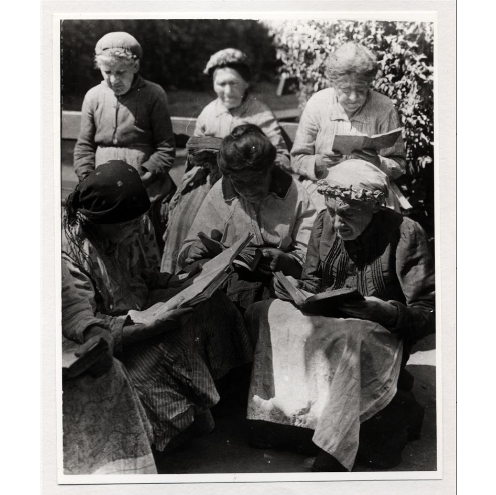
A clearly patriarchal structure governed traditional Jewish life: men counted in a prayer quorum, learned Talmud, read, wrote; women did not. Yes—but. In reality, many Jewish women in medieval and early modern Europe read, wrote, worked in the publishing trade, taught women and led their prayers. In this course, we will encounter the writings of several such women, reading excerpts in class and discussing the personal concerns, historical context they reveal and considering the meaning of their work for us today. Authors under consideration may include: Biblical Deborah, Talmudic Beruriah, Sara Copia Sulam (1592-1641), Rivkah Tiktiner (Cracow, Prague; d. 1605), Glikl bas Judah Leib (Hamburg and Metz; 1645-1724), Beila Perlhefter (Prague, Altdorf, Italy; d. 1709).
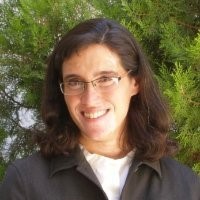 Rachel L. Greenblatt is Judaica Librarian at Brandeis, and has taught at Dartmouth College and Harvard and Wesleyan Universities. She holds a Ph.D. in Jewish History from the Hebrew University of Jerusalem, and B.A. in History from Cornell. She has also studied biblical and rabbinic text at the Pardes Institute and at Matan – the Sadie Rennert Women’s Institute for Torah Study, both in Jerusalem.
Rachel’s scholarship focuses on the cultural and social history of Jews in central and eastern Europe. She is the author of To Tell Their Children: Jewish Communal Memory in Early Modern Prague (Stanford University Press, 2014), which incorporates a wide variety of material and textual sources in reconstructing the ways in which Prague’s early modern Jews—women and men, young and old—told their own stories of their communal past and familial histories.
 In partnership with Hebrew College Open Circle Jewish Learning.